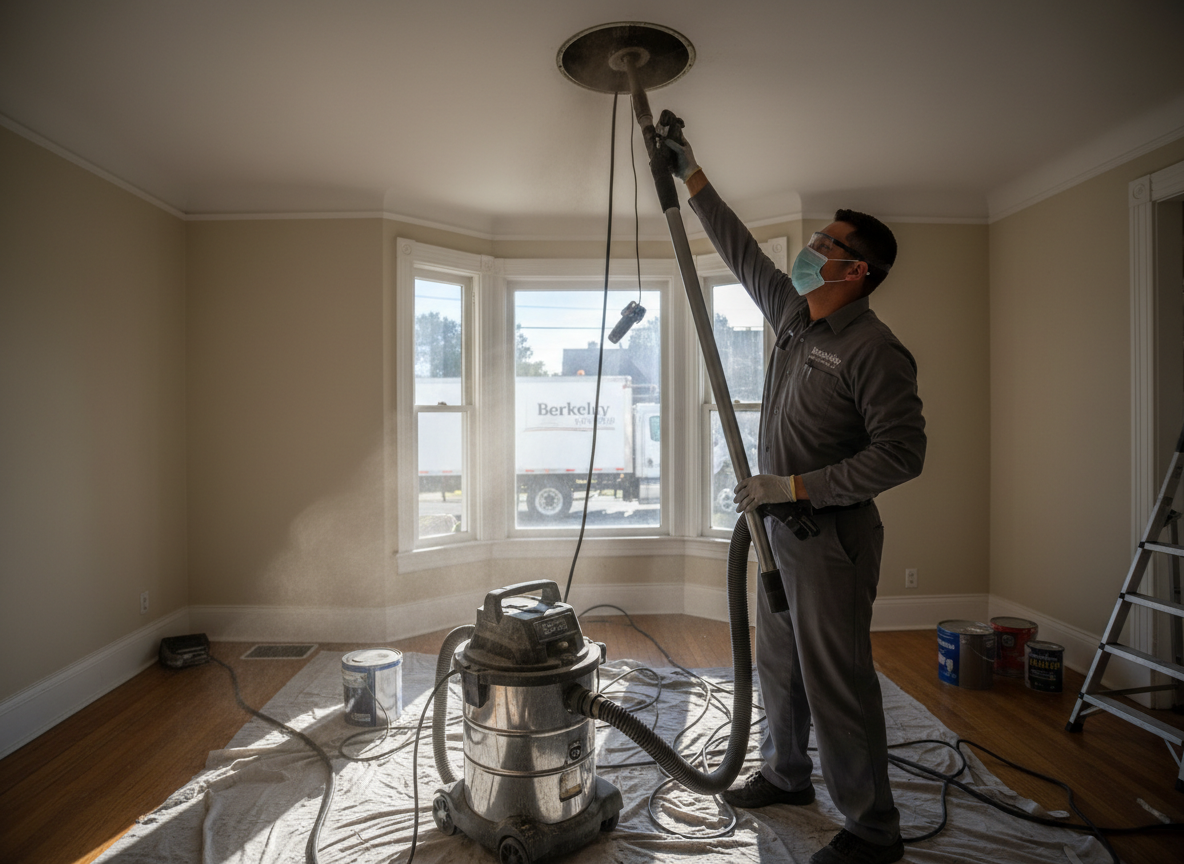
Berkeley Heights homes built from the 1950s onward often feature rigid metal duct runs with multiple 90-degree turns that trap construction dust, pet dander, and pollen carried in from the Watchung Reservation area. When these lines are not opened at each register, a standard truck-mounted vacuum leaves residue in the elbows, allowing it to recirculate during the humid summer months when the HVAC runs continuously. Technicians who work these streets know to pull the boots at the main trunk and use whips sized for the 6-inch and 8-inch lines typical in split-levels along Snyder Avenue.
Winter heating cycles in the Berkeley area push fine road salt dust from Route 22 through the return vents, coating the blower compartment and creating a gritty film that standard filters miss. Crews start by mapping every supply and return before any negative pressure is applied, because many 1960s homes here have returns located in exterior walls that can collapse if too much suction is used. After cleaning, registers are reinstalled with new foam gaskets to prevent the whistling that homeowners often mistake for equipment failure.
Edge cases appear in the split-levels near the Berkeley Heights border with New Providence, where finished basements were added later and flex duct was run through joist bays without proper support. These sections sag and collect condensate, turning into mold sites that require physical removal rather than chemical fogging alone. A thorough job always includes checking the plenum for loose insulation fragments that can be pulled into the system during the first heating cycle after cleaning.
Technician insight
In Berkeley Heights the thing that catches most people out with air vent cleaning is the number of mid-century split-levels along Snyder Ave where returns sit in exterior walls and were never meant to be opened again—pulling those without bracing the sheet metal usually dents the duct and creates new leaks that only show up after the first cold snap.
Collapsed Flex in a Berkeley Heights Basement
Homeowner called after noticing weak airflow from the finished basement registers. Inspection showed a 15-foot flex run that had sagged and collected standing moisture. The line was cut out, replaced with rigid duct supported at proper intervals, and the rest of the system was cleaned under negative pressure. Airflow returned to design levels and the musty odor disappeared.
How it works
- 1
System Mapping
Technicians locate every supply and return vent, note duct material and diameter, and identify access points without cutting into finished ceilings.
- 2
Register Removal and Protection
Registers are taken off, labeled, and floors are covered before negative-pressure equipment is connected to the main trunk.
- 3
Mechanical Agitation and Extraction
Rotating brushes and compressed-air whips loosen debris while the vacuum draws material out; flex sections receive extra passes to clear sags.
- 4
Final Inspection and Reassembly
Each line is checked with a camera, registers are reinstalled with fresh gaskets, and the homeowner walks the system to confirm airflow.
Pricing
Pricing depends on number of vents, duct material, and access difficulty; quotes given after on-site mapping.