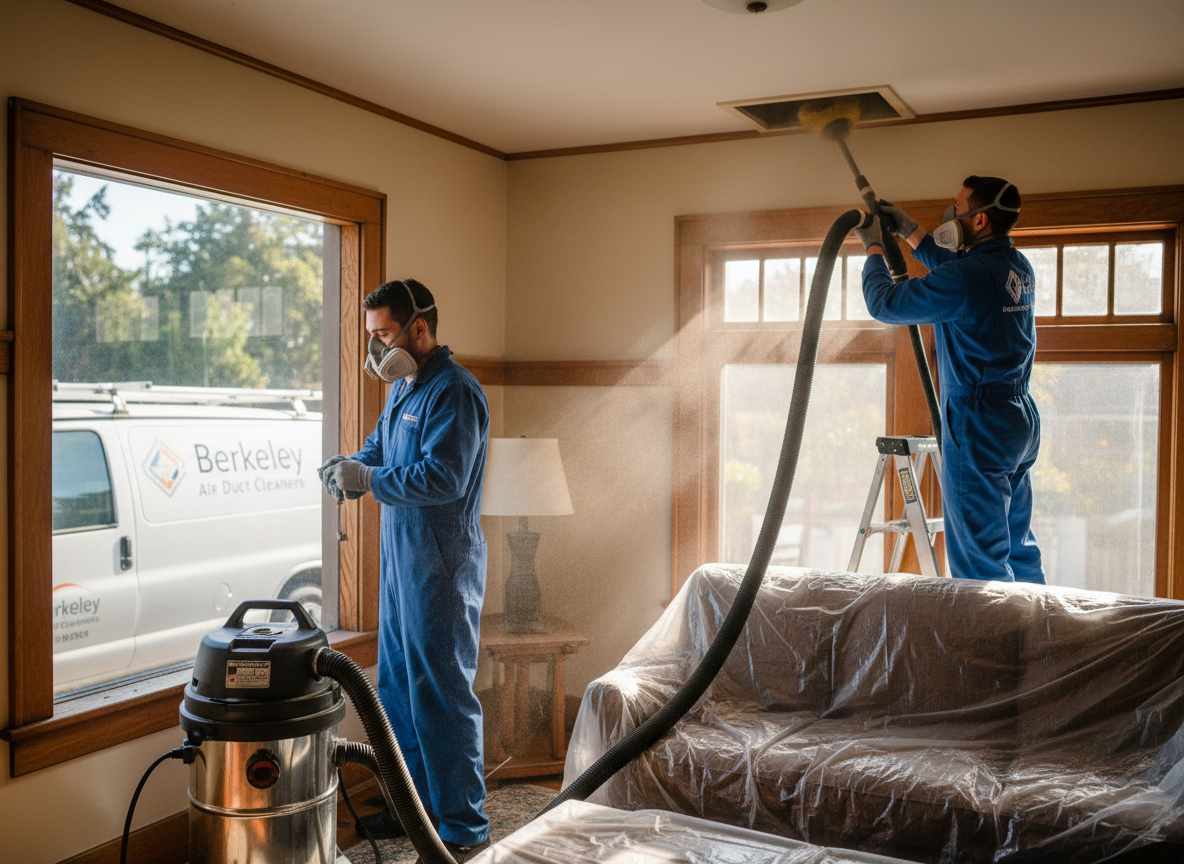
Berkeley Heights and nearby sections of Berkeley feature many mid-century homes with original duct runs that collect pollen, pet dander, and construction dust from renovations common in the area. These systems often include flexible duct sections that can sag or tear when negative pressure is applied too aggressively during cleaning. Proper brushing and vacuuming must account for the narrow access points typical in split-level layouts found along Snyder Avenue and surrounding streets.
New Jersey's humid summers promote moisture inside metal ducts, especially where insulation has settled or where returns pull air from crawl spaces common in Berkeley Heights terrain. Technicians check for microbial growth near cooling coils and recommend source removal rather than fogging alone. Cold winters drive more indoor time with windows closed, recirculating the same air through neglected returns and making seasonal cleaning more noticeable to residents.
Edge cases include homes with asbestos-wrapped ductwork from the 1950s and 1960s, which requires containment and specialized handling before any agitation begins. Return plenums under stairs or in utility closets frequently hold heavy debris that standard tools miss without disassembly. Crews also inspect for disconnected sections that allow unfiltered air from attics or garages to enter the living space.
Seasonal Considerations
Spring pollen loads and fall leaf debris increase the frequency of filter changes and visible dust on registers in Berkeley homes. Winter heating cycles can dry out and crack older duct seals, allowing conditioned air to leak into wall cavities before it reaches rooms.
Technician insight
In Berkeley, the thing that catches most people out with Residential Air Duct Cleaning is how many 1960s split-level homes along the hills have flexible duct runs that collapse or tear when standard brushes are used without first supporting the line from below.
Split-Level Home Near Snyder Ave
Homeowner noticed heavy dust on furniture shortly after turning on the heat. Inspection revealed collapsed flex duct in the basement return and years of construction debris from a recent kitchen remodel. Crew supported the line, performed contained agitation, and restored proper airflow without disturbing the finished ceilings.
How it works
- 1
Initial Walkthrough
Technician inspects every accessible register, return, and the main trunk lines to map the system layout and note any damaged sections.
- 2
Negative-Air Setup
Equipment is connected at the furnace or air handler to create containment while brushes and whips agitate debris throughout the runs.
- 3
Source Removal
Rotating brushes and compressed-air tools dislodge buildup; all material is pulled into the vacuum truck without redistribution into living spaces.
- 4
Post-Cleaning Verification
Registers are reinstalled, airflow is checked, and the homeowner receives a visual summary of what was removed from the system.
Pricing
Cost depends on number of runs, access difficulty, and whether flexible duct sections need repair or replacement; upfront quotes provided after inspection.