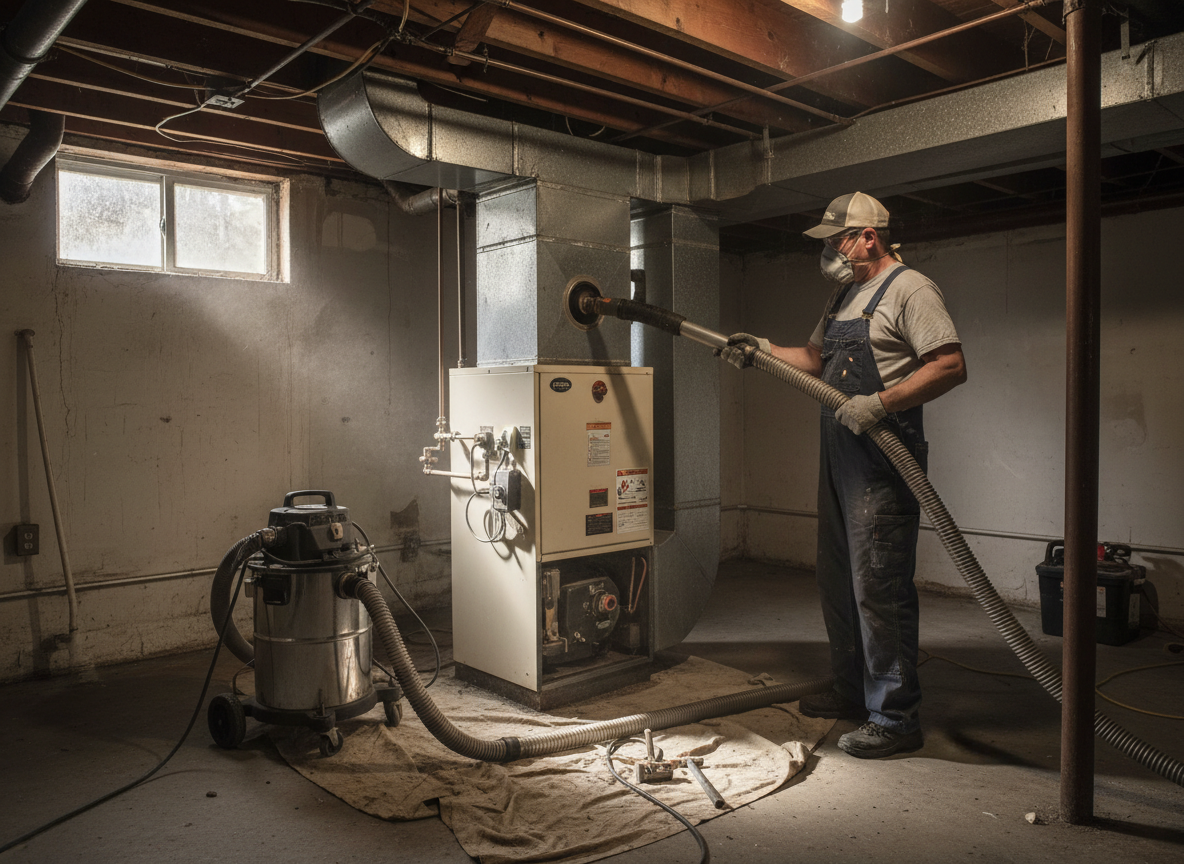
Furnace and duct cleaning in the Berkeley area focuses on forced-air systems common in homes built from the 1950s onward. These systems often accumulate dust, pet dander, and construction debris that restricts airflow and strains the furnace blower. Technicians access supply and return lines through existing registers and the furnace plenum, using negative-pressure equipment to pull contaminants without spreading them into living spaces.
Older Berkeley Heights properties frequently have flexible duct runs or trunk lines routed through crawl spaces and attics that trap moisture during humid summers. This creates conditions for mold growth once heating resumes in fall. Cleaning crews inspect for collapsed sections or disconnected joints before vacuuming, then verify proper reconnection to maintain system balance and prevent carbon monoxide risks from backdrafting.
Seasonal temperature swings in Union County accelerate filter loading and dust migration into ducts. Homeowners who skip annual furnace maintenance see heavier buildup in the heat exchanger area, which reduces efficiency and shortens equipment life. A full furnace and duct cleaning includes removing the blower assembly for separate washing and inspecting the heat exchanger for cracks before reassembling.
Access limitations in split-level or ranch-style homes common around Snyder Avenue require extra time to reach remote branch lines. Technicians use specialized whips and brushes sized for 4-inch to 8-inch ducts to dislodge debris without damaging the lining, then document before-and-after airflow readings at each register.
Technician insight
In Berkeley Heights the thing that catches most people out with furnace and duct cleaning is the amount of fine construction dust still trapped in original 1960s trunk lines that only moves once the system runs hard during the first cold snap.
Restricted Airflow in Split-Level Home
A homeowner in Berkeley Heights reported weak heat on the upper level. Inspection showed collapsed flex duct in the attic trapping years of accumulated dust. Crews replaced the damaged section and extracted debris from the remaining runs. Airflow returned evenly across all registers.
How it works
- 1
Initial System Inspection
Technicians examine the furnace, blower, and all accessible duct runs to identify blockages, moisture, or disconnected sections before any cleaning begins.
- 2
Register and Plenum Access
Registers are removed and the plenum is opened to create entry points for negative-pressure hoses and agitation tools.
- 3
Negative-Pressure Extraction
Contaminants are pulled from the entire duct network using HEPA-filtered vacuum equipment while brushes and whips loosen debris inside the lines.
- 4
Blower and Heat Exchanger Service
The blower assembly is removed, cleaned separately, and the heat exchanger is inspected for damage before reassembly and system testing.
Pricing
Pricing depends on number of stories, duct accessibility, and extent of debris; contact for an upfront assessment.