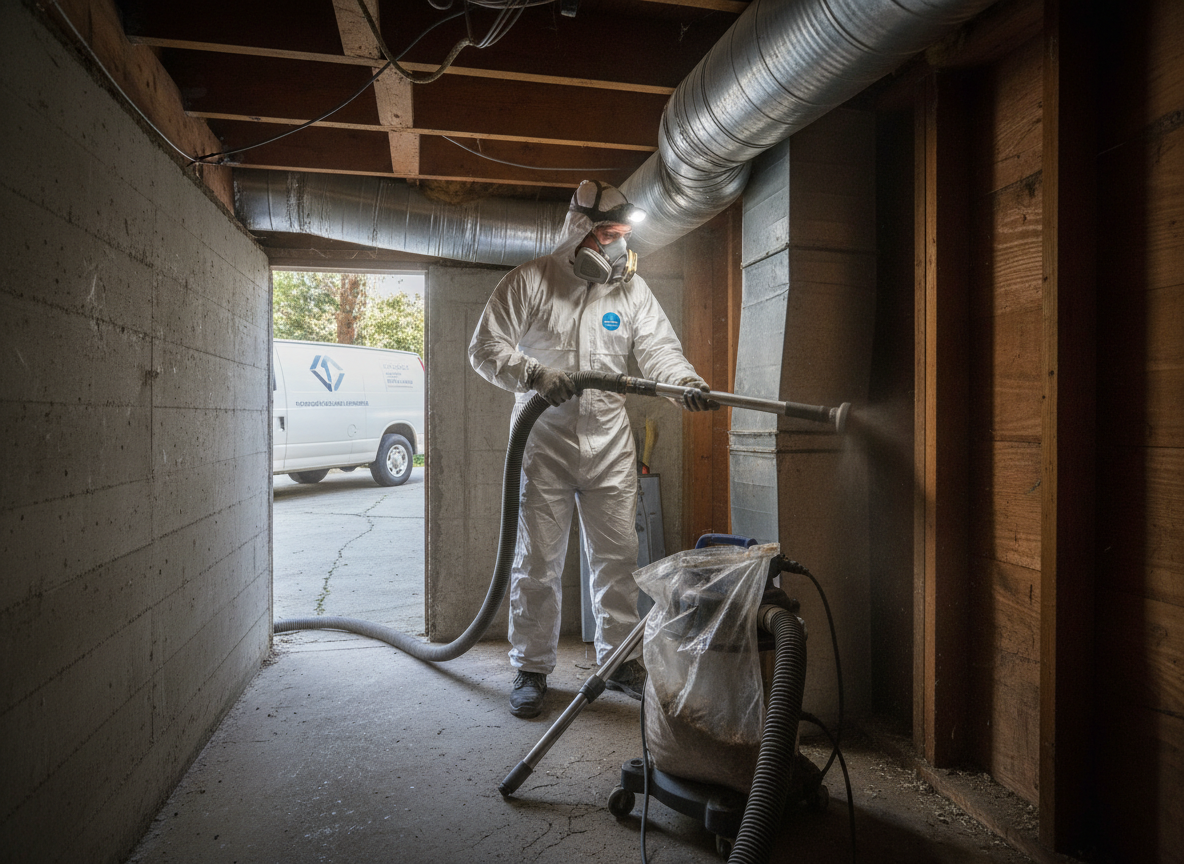
Berkeley Heights homes built from the 1950s onward often feature rigid metal trunk lines feeding flexible branch ducts that trap construction dust, insulation fibers, and seasonal pollen from the Watchung Reservation area. Summer humidity combined with winter heating cycles creates condensation points where mold colonies form along the seams, especially in finished basements where ducts run through unconditioned spaces. Cleaning these systems requires removing registers first, then using negative-air machines to prevent debris from re-entering living areas while agitating tools reach the far runs.
Technicians working in Union County properties routinely encounter collapsed flex duct sections caused by attic heat and foot traffic during roof work. These restrictions reduce airflow and create hot spots that standard brushes cannot navigate without risking tears. Proper service includes locating and replacing damaged sections rather than forcing equipment through them, followed by sealing joints with mastic to prevent future leakage in the humid New Jersey climate.
Homeowners in the Berkeley area sometimes attempt DIY vacuuming through registers, which only pulls loose surface dust while pushing heavier particles deeper into the plenum. Professional equipment uses HEPA filtration and source capture so contaminants exit the house instead of recirculating through the HVAC system. Access limitations in tight crawl spaces under split-level homes on the local terrain also require specialized whips and cameras to verify complete cleaning.
Technician insight
In Berkeley Heights, the thing that catches most people out with HVAC duct cleaning is how many split-level homes from the 1960s have flex runs stapled directly to floor joists in finished basements where summer humidity turns trapped dust into mold before the first heating season.
Collapsed Flex in Finished Basement
Homeowner reported weak airflow from several first-floor vents in a 1965 split-level. Inspection showed two flex branches pinched flat against joists in the finished basement. Crew replaced the damaged sections, cleaned the remaining trunk line, and restored full airflow without disturbing finished surfaces.
How it works
- 1
Initial Inspection
Technician examines all accessible duct runs, registers, and the air handler to map the system layout and note any collapsed sections or moisture issues common in Berkeley Heights homes.
- 2
System Isolation
Registers are removed and openings sealed while a negative-air machine is connected to contain debris during agitation.
- 3
Mechanical Cleaning
Rotary brushes and compressed-air whips dislodge buildup from trunk lines and branches, with debris pulled into the collection unit.
- 4
Final Verification
Camera inspection confirms cleared ducts, damaged flex sections are replaced if found, and registers are reinstalled with proper sealing.
Pricing
Pricing varies by number of runs, accessibility, and any needed flex duct repairs; upfront quote follows inspection.