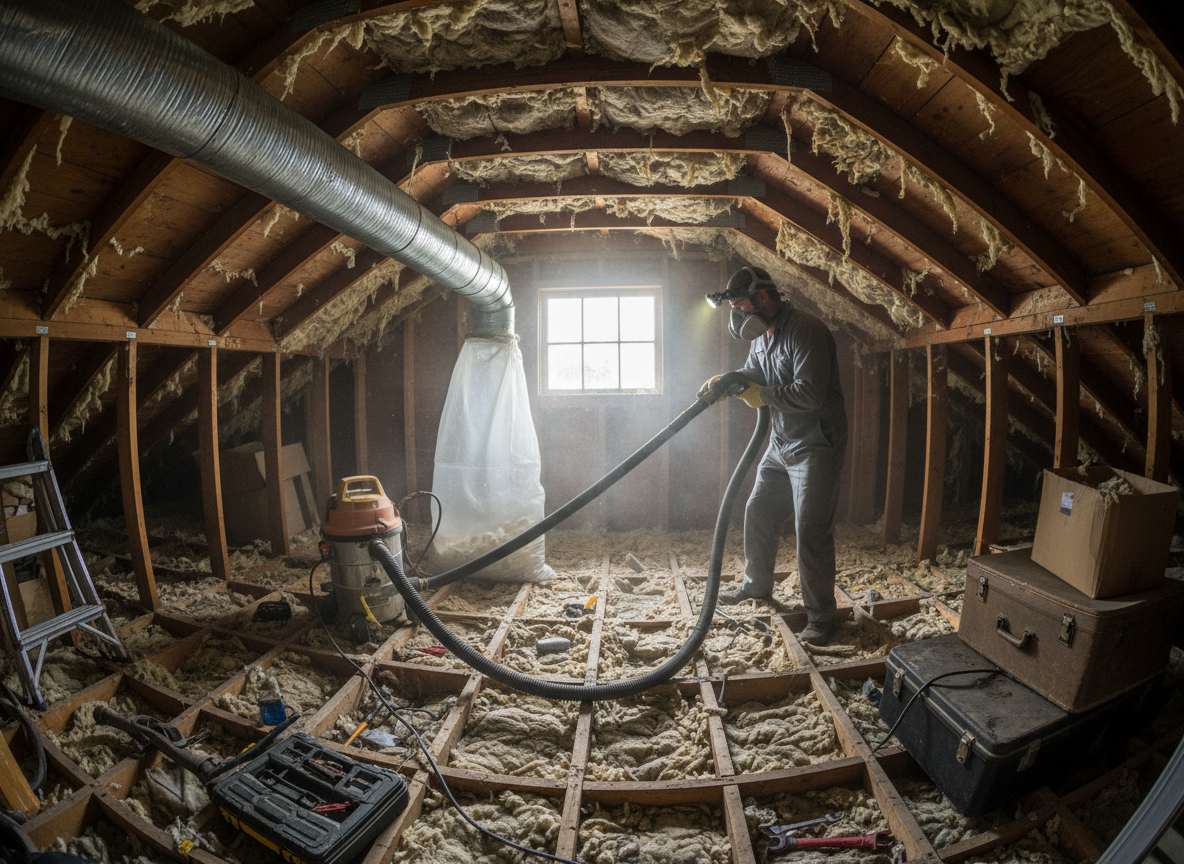
Attic duct cleaning targets the supply and return lines that run through unfinished spaces above living areas in Berkeley Heights homes. Many houses along Snyder Ave and nearby streets were built between the 1950s and 1970s with flexible ductwork that collects fine dust, insulation fibers, and pollen that settles from roof vents. Technicians must work around existing insulation batts and truss layouts without disturbing vapor barriers, which can tear and allow moisture into the living space below during humid summer months.
Access points are often limited in these older attics, requiring careful removal of ceiling registers and temporary sealing of HVAC equipment to prevent debris from falling into finished rooms. In Berkeley Heights the combination of winter heating cycles and summer humidity encourages condensation inside metal ducts, especially where they pass near roof eaves. Proper negative-air machines and brush agitation are used to pull material out without spreading it through the rest of the system.
Homeowners sometimes notice reduced airflow or musty odors after heavy spring pollen seasons because attic ducts sit directly under roof decks that warm and cool rapidly. Cleaning focuses on the full length of each run rather than just the furnace connection, since many two-story homes in the area have long horizontal sections that trap debris far from the air handler.
Seasonal Considerations
Spring pollen and fall leaf debris increase the load on attic ducts in Berkeley Heights. Scheduling before peak heating or cooling seasons prevents the first big system run from redistributing accumulated material into living areas.
Technician insight
In Berkeley Heights the thing that catches most people out with attic duct cleaning is how insulation settles and packs around the ducts over decades, especially in homes near Snyder Ave where roof leaks from winter ice dams can dampen the material and make extraction messier than expected.
Hidden debris in a two-story attic
A homeowner in Berkeley Heights reported weak airflow on the second floor after a wet spring. Inspection showed compacted insulation and pollen blocking a long horizontal duct run under the eaves. Negative-air cleaning cleared the line and restored even airflow without disturbing the existing insulation layers.
How it works
- 1
Initial Assessment
Technician inspects attic access, duct layout, and visible condition while noting insulation depth and any signs of moisture near roof eaves.
- 2
System Isolation
Registers are sealed and the air handler is protected so debris stays contained within the attic runs during cleaning.
- 3
Agitation and Extraction
Rotating brushes and compressed air dislodge material while a negative-air vacuum pulls it out through the attic access point.
- 4
Final Verification
Each run is checked with a camera and airflow is tested at registers before equipment is restored to normal operation.
Pricing
Pricing is quoted after an on-site inspection because attic duct length, insulation depth, and access difficulty vary widely between homes in Berkeley Heights.