Berkeley Township homes, especially those in neighborhoods near Toms River and along Route 9, often feature duct systems installed in the 1970s and 1980s that run through humid crawlspaces. Salt air from the coast accelerates corrosion on metal ducts while seasonal temperature swings drive condensation inside the lines. When homeowners notice musty odors or increased allergy symptoms after summer storms, the source is frequently restricted airflow combined with organic buildup rather than simple filter changes.
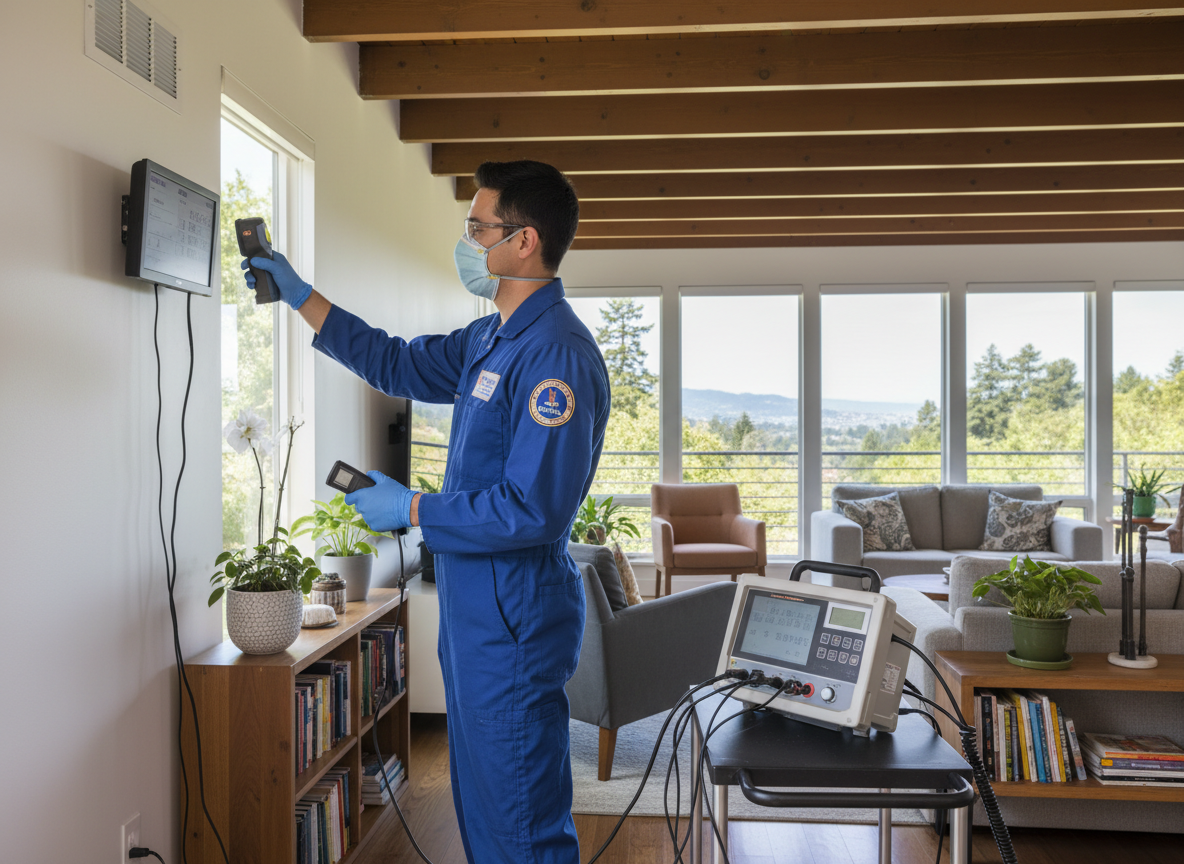
Effective indoor air quality work here starts with mapping the full trunk and branch layout before any equipment enters the system. Technicians check for disconnected joints near the air handler, collapsed flex runs in attics, and insulation gaps that allow attic dust to enter supply air. In older Berkeley properties, negative pressure from kitchen exhaust fans can pull crawlspace air into living spaces, so sealing and cleaning must be coordinated to avoid making the problem worse.
Equipment choice matters because high-static vacuums can collapse older duct board if not used with proper access points. After negative-air cleaning, each register is removed and the interior boot wiped to capture debris that would otherwise recirculate. Homeowners in the Berkeley area are advised to schedule this work outside peak summer humidity periods so the system dries thoroughly before heavy cooling loads return.
Technician insight
In Berkeley, the thing that catches most people out with indoor air quality services is moisture trapped in crawlspace ducts of 1970s and 1980s homes near the bay; once humidity spikes, mold colonies form on the duct liner and standard surface cleaning leaves the growth inside the insulation where it keeps shedding spores.
Musty Odor After Summer Storms
A Berkeley Township split-level showed persistent musty smells in the living room after heavy rain. Inspection found disconnected flex duct in the crawlspace pulling moist air into the return. The crew sealed the joint, performed negative-air cleaning on the full system, and confirmed improved airflow at every register.
How it works
- 1
Initial System Mapping
Technicians inspect every accessible trunk, branch, and register location to identify restrictions and moisture issues specific to the home's layout.
- 2
Negative-Air Containment Setup
Equipment creates controlled airflow that prevents loosened particles from escaping into living areas during the cleaning process.
- 3
Mechanical Agitation and Extraction
Rotating brushes and compressed air tools dislodge debris along the full length of each run while the vacuum removes it from the system.
- 4
Register and Boot Cleaning
Each supply and return opening is cleaned individually and reinstalled to eliminate residual dust that would otherwise re-enter the airstream.
Pricing
Upfront quotes provided after on-site inspection; cost varies with number of runs, access difficulty, and any moisture remediation required.