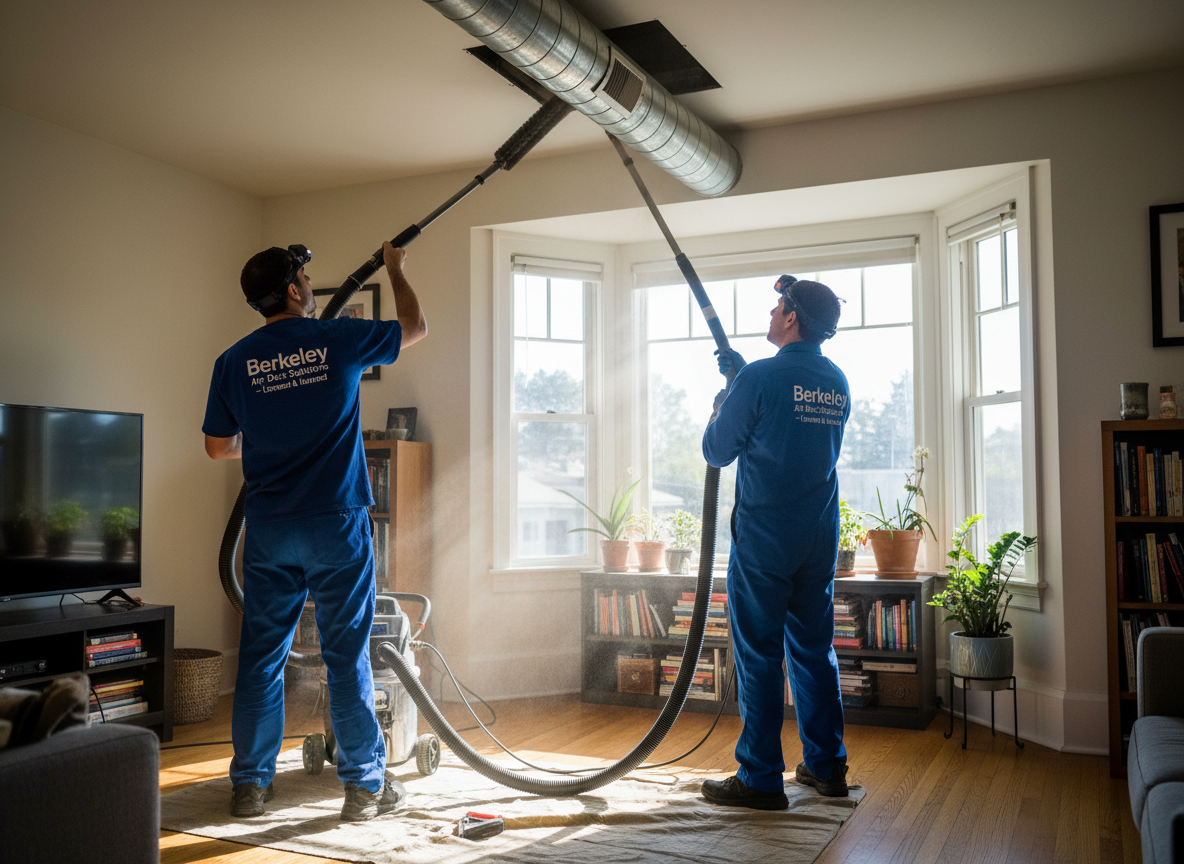
Berkeley Heights sits in Union County with many homes built from the 1950s onward that use a mix of rigid sheet metal and flexible duct runs. Over decades these systems collect construction dust, insulation fibers, and pollen that standard household filters never catch. When homeowners notice uneven airflow or musty smells from vents, the issue often traces back to buildup at elbows and trunk lines rather than the furnace itself. Proper cleaning requires accessing those points without damaging the original duct seams that older local installers used.
Seasonal humidity in the area lets mold spores settle inside ducts during spring and fall when systems cycle less often. A thorough job starts with a camera inspection to map every branch before any agitation or vacuum work begins. Technicians then use brushes sized for both metal and flex duct so they do not tear the inner liner that many 1970s-1980s homes here still have. Final steps include sealing access points with the same mastic that local code expects on new work so the system stays balanced.
Residents near Snyder Ave and along the hillier streets often see more dust return because gravity pulls settled material toward lower returns. Skipping the return-side cleaning leaves the supply side re-contaminating within weeks. We always verify static pressure before and after so the homeowner can see the difference on their own gauges rather than relying on promises.
Technician insight
In Berkeley Heights the thing that catches most people out with licensed and insured duct cleaners is the mix of rigid and flex duct in homes built before 1980 along Snyder Ave. Those flex sections sag over time and trap debris in folds that standard brushes miss unless you use smaller tools and extra vacuum passes.
Uneven Airflow in a Snyder Ave Split-Level
The homeowner reported weak airflow on the upper floor and a musty smell from one return. Inspection showed heavy lint and insulation fibers packed inside a sagging flex run that connected the main trunk to the second-story branch. We created two access points, used a smaller brush head to clear the folds, and restored full static pressure without replacing the original duct.
How it works
- 1
Initial Camera Inspection
We run a scope through every accessible trunk and branch to locate heavy buildup and note any damaged flex sections common in Berkeley Heights homes.
- 2
Access Point Creation
Small, code-compliant openings are cut at strategic points so tools reach the full length of runs without tearing existing ductwork.
- 3
Agitation and Vacuum
Rotating brushes sized for metal and flex duct loosen debris while a negative-air machine pulls everything out to prevent recirculation inside the home.
- 4
Sealing and System Check
Openings are sealed with mastic, registers are cleaned, and static pressure is rechecked to confirm improved airflow.
Pricing
Upfront quotes after inspection; price depends on number of runs, duct material, and access difficulty.